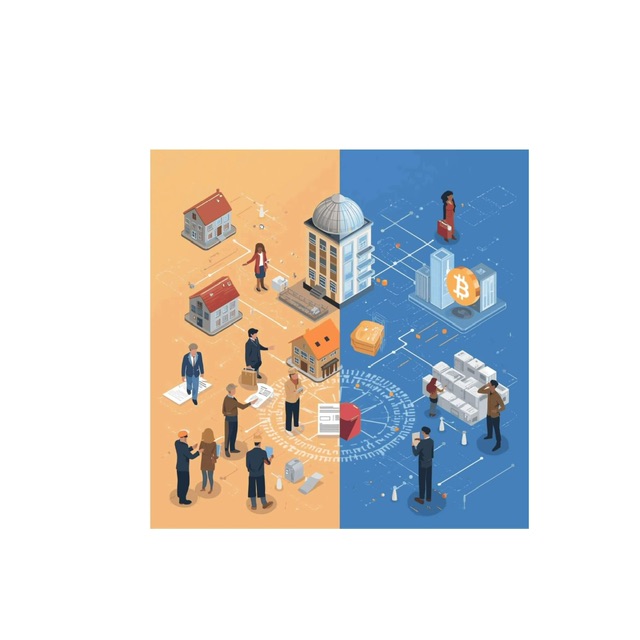
Buying or selling property has always required trust. Buyers need to know the seller actually owns the property. Sellers need to prove their legitimacy without handing over sensitive documents to strangers. Traditionally, this process relies on layers of intermediaries, paperwork, and time-consuming verification.
Blockchain property verification offers a different approach. It creates a tamper-proof digital certificate that proves ownership, visible to anyone but impossible to forge. No middlemen. No document sharing. Just transparent, verifiable proof.
The Problem with Traditional Property Verification
When you browse property listings today, how do you know who you are dealing with? The listing might be from the actual owner, an authorized agent, or someone reposting without permission. This uncertainty creates friction in every property transaction.
For sellers, the challenge is equally frustrating. Proving you are the legitimate owner typically means sharing title deeds, identification documents, and legal paperwork with potential buyers who are, at that point, complete strangers. This creates privacy risks and slows down the sales process.
How Blockchain Verification Works
Blockchain property verification works by recording ownership information on a decentralized, immutable ledger. Once recorded, this information cannot be altered, deleted, or forged by anyone, including the platform that created it.
The process is straightforward:
- A property owner submits their details and ownership documents for verification.
- The platform verifies the information against official records.
- A digital certificate (in the form of an NFT) is minted on the blockchain.
- This certificate serves as a publicly verifiable proof of ownership.
- Potential buyers can check the certificate at any time without needing the seller to share private documents.
The key distinction is that this NFT is not an investment instrument or a security. It is a verification certificate, a digital badge that says: this person is the confirmed owner of this property.
Why This Matters for the Real Estate Market
The real estate market is entering a period of significant digital transformation. According to Deloitte’s 2025 Financial Services
Predictions, the global market for tokenized real estate is expected to reach US$4 trillion by 2035, growing at a compound annual rate of 27%. This growth is being driven by blockchain technology that makes property transactions more transparent, efficient, and accessible.
For individual property owners, this shift means that having verifiable, blockchain-recorded ownership will increasingly become a competitive advantage when marketing properties, especially to international buyers who cannot easily verify ownership through traditional channels.
Blockchain Verification vs. Traditional Methods
| Aspect | Traditional Verification | Blockchain Verification |
|---|---|---|
| Speed | Days to weeks | Minutes |
| Document sharing | Required with strangers | Not required |
| Forgery risk | Possible with paper documents | Impossible on blockchain |
| Cost | High (lawyers, notaries) | Low (one-time minting fee) |
| International verification | Complex and expensive | Instant, borderless |
| Tampering | Documents can be altered | Records are immutable |
How Stellarise Uses Blockchain Verification
Stellarise is a blockchain-powered platform that enables property owners to verify their ownership and market their properties with confidence. Built on the Polygon blockchain, Stellarise uses NFTs purely as digital certificates of authenticity, not as investment products or securities.
When a property owner gets verified on Stellarise, they receive a “Verified Owner” badge that is visible to all potential buyers. This badge is backed by an immutable blockchain record that anyone can check. Buyers browsing properties can filter for verified owners, saving time and reducing the risk of dealing with unauthorized sellers.
Importantly, Stellarise does not facilitate property sales directly. The actual purchase still follows standard legal channels through licensed lawyers. Stellarise simply helps establish trust at the beginning of the process, making the property marketing phase more transparent and efficient.
Key Takeaways
- Blockchain property verification creates tamper-proof digital certificates that prove ownership.
- Property owners can prove legitimacy without sharing sensitive documents with strangers.
- The NFT serves as a verification badge, not an investment instrument.
- The global tokenized real estate market is projected to reach $4 trillion by 2035.
- Verified properties attract more serious buyers and stand out from unverified listings.
Frequently Asked Questions
How is blockchain property verification different from a normal land office record?
Land office records are managed by a single authority and accessible only through that authority. A blockchain record is replicated across thousands of independent computers and viewable by anyone with the property reference, in seconds, from anywhere in the world. The two are complementary — the land office remains the legal source of truth; the blockchain record is the publicly verifiable proof a buyer can check before contacting you.
Does Stellarise’s verification replace lawyers or land office records?
No. The actual legal transfer of a property still goes through licensed lawyers and the relevant land office. Stellarise verifies that you are the legitimate owner at the marketing stage, so buyers and agents can trust your listing before the legal process begins.
Can a verified property be re-verified when it changes hands?
Yes. After a sale completes through the legal channel, the new owner re-verifies under their own Stellarise account and the smart contract updates the record on the blockchain. The previous verification stays visible as part of the property’s history.
How much does blockchain property verification cost?
The blockchain transaction cost on Polygon is approximately USD 0.01 per verification. Stellarise covers this as part of the verification process, so property owners do not need to hold cryptocurrency or pay gas fees.
SOURCES & REFERENCES
• Deloitte — Tokenized Real Estate $4T by 2035: https://www.deloitte.com/us/en/insights/industry/financial-services/financial-services-industry-predictions/2025/tokenized-real-estate.html
• Polygon — RWA & Tokenization: https://polygon.technology/tokenization
• BOVAEA / LPPEH — Public Register of Negotiators and Agents (Malaysia): https://search.lppeh.gov.my/
• Council for Estate Agencies (Singapore) — Public Register: https://eservices.cea.gov.sg/aceas/public-register/
• Cointelegraph — Tokenized Real Estate Trading Platform Launches on Polygon: https://cointelegraph.com/news/tokenized-real-estate-trading-platform-launches-polygon
