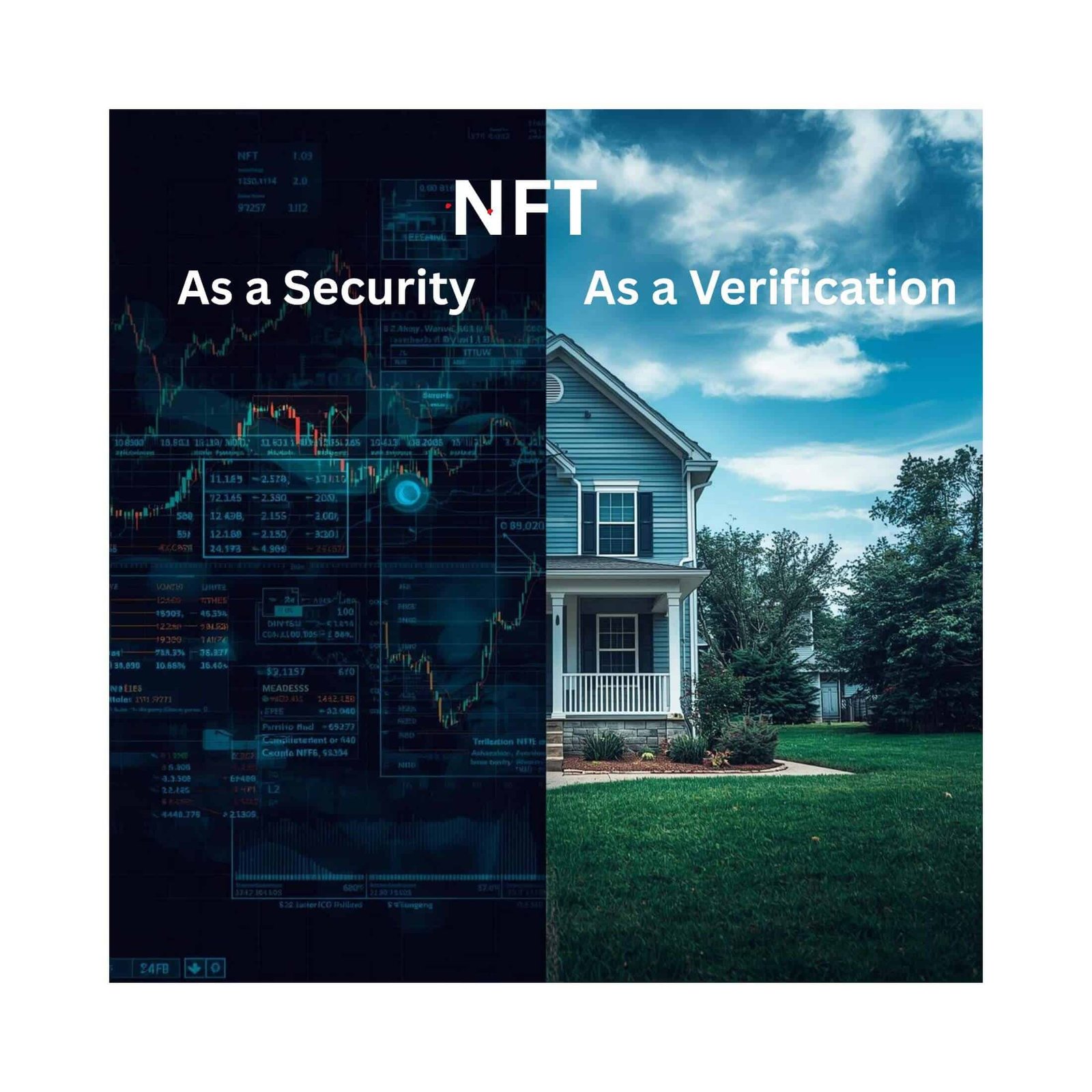
The word “tokenization” in real estate can mean very different things depending on how it is used. Some platforms use tokens to represent fractional investment shares in a property, which typically falls under securities regulation. Others use tokens purely as verification tools for property marketing. Understanding this distinction is essential for anyone entering the blockchain real estate space, whether as a platform operator, property owner, or buyer.
Two Very Different Uses of NFTs in Real Estate
NFTs as Investment Instruments (Securities)
When a platform divides a property into fractional shares and sells those shares as tokens, investors are essentially buying a financial product. They expect returns through rental income, property appreciation, or both. This model, regardless of the technology used, typically qualifies as a securities offering under most jurisdictions.
Characteristics of securities-based tokenization:
- Investors purchase tokens expecting financial returns.
- Tokens represent fractional ownership or shares in a property entity (usually an LLC or SPV).
- Token holders receive dividends from rental income.
- Tokens can be traded on secondary markets.
- The platform must comply with securities regulations (SEC in the US, Securities Commission in Malaysia, etc.).
NFTs as Marketing Verification Certificates
A fundamentally different approach uses NFTs not as investment products but as digital certificates that verify property ownership for marketing purposes. In this model, no investment is being offered. No returns are promised. The NFT simply proves that a seller is the legitimate owner of a property, helping them market it more effectively and helping buyers make confident decisions.
Characteristics of marketing-based verification:
- The NFT is a proof-of-ownership certificate, not a financial product.
- No investment returns are offered or implied.
- No fractional ownership or shares are created.
- Property sales follow standard legal processes through licensed lawyers.
- The NFT helps establish trust, not facilitate transactions.
- No cryptocurrency is used for property payments.
Why This Distinction Matters ?
Regulatory bodies worldwide are paying close attention to how blockchain and NFTs are used in real estate. In the United States, the SEC has made clear that the format of a security does not change its legal classification. Whether ownership is recorded on paper, in a database, or on a blockchain, if it functions as an investment contract, it is a security.
In Malaysia, the Securities Commission and MDEC (Malaysia Digital Economy Corporation) regulate digital assets. Platforms that offer fractional property investment through tokens must comply with securities laws. However, platforms that use blockchain technology solely for property marketing and verification purposes, without offering investment returns or fractional ownership, operate in a different regulatory space.
The European Union’s Markets in Crypto-Assets (MiCA) regulation, which came into effect in 2025, further illustrates this distinction by providing separate frameworks for different types of digital assets based on their function and use case.
How Stellarise Stays on the Right Side of This Line ?
Stellarise uses NFTs exclusively as digital verification certificates for property marketing. The platform does not offer investment products, fractional ownership, or promised returns. Here is specifically what Stellarise does and does not do:
What Stellarise does:
- Verifies property ownership and records it on the Polygon blockchain.
- Issues a Verified Owner badge visible to potential buyers.
- Helps property owners market their properties with proven legitimacy.
- Enables buyers to filter for verified listings.
- Facilitates trust between parties before the legal sales process begins.
What Stellarise does not do:
- Offer investment products or financial returns.
- Create fractional ownership shares in properties.
- Facilitate property transactions or handle payments.
- Promise rental income or capital appreciation.
- Use cryptocurrency for property sales.
When a property is sold, the transaction follows standard legal channels. A licensed lawyer must legalize the transfer of ownership. Only after the legal process is complete does the smart contract update the NFT to reflect the new owner.
The Growing Market for Property Verification
While much of the industry attention has focused on tokenized property investment (the securities side), there is a growing recognition that blockchain verification for property marketing addresses a massive, underserved need. Property fraud, misrepresentation, and lack of seller verification are widespread problems, especially in cross-border transactions.
According to recent research, properties linked with digital NFT verification have seen a 30% increase in buyer inquiries. As the broader tokenized real estate market grows toward the $4 trillion mark projected by Deloitte for 2035, the verification layer that Stellarise provides becomes increasingly valuable as a trust infrastructure that supports, rather than replaces, traditional property sales.
Key Takeaways
- NFTs in real estate can serve as investment instruments (securities) or verification certificates (marketing tools).
- The legal classification depends on function, not technology.
- Platforms offering fractional ownership or returns must comply with securities regulations.
- Stellarise uses NFTs solely for ownership verification and property marketing.
- No investment is offered, no returns are promised, and property sales follow standard legal processes.
- This approach provides the trust benefits of blockchain without the regulatory complexity of securities offerings.
Frequently Asked Questions
Is buying a property through Stellarise considered investing in a security?
No. Stellarise’s NFT is a verification certificate — proof that a specific person is the registered owner of a specific property. There is no investment product, no fractional share, no expected return, and no resale market for the certificate itself. The actual property purchase happens through standard legal channels with a licensed lawyer.
Could Stellarise ever be regulated as a securities platform?
Only if its model fundamentally changed. As long as the NFT functions purely as ownership proof for marketing purposes — with no investment offering, no profit-sharing, no fractional ownership — it sits outside the securities frameworks the SEC, the Securities Commission of Malaysia, MAS Singapore, and the EU’s MiCA regulation are designed to govern.
What is the practical difference between an NFT and a security token?
A security token represents an investment contract and pays returns. An NFT, in Stellarise’s use, represents a unique verification — like a digital certificate of authenticity. The same underlying technology can produce both, but the legal classification depends on what the token does, not how it is built.
Do Malaysian, Singaporean and EU laws treat these differently?
The structural distinction is the same in all three jurisdictions: tokens that function as investment contracts are securities; tokens that function as verification or utility are not. The specific regulator changes (SC Malaysia, MAS Singapore, ESMA in the EU under MiCA), but the legal logic does not.
Can Stellarise’s verification certificate be sold or traded separately from the property?
No. The certificate is bound to the property and to the verified owner. When the property is legally sold, the certificate transfers with it, in the same way a paper title deed would. There is no secondary market for Stellarise verifications, by design.
SOURCES & REFERENCES
• US Securities and Exchange Commission (SEC): https://www.sec.gov/
• Securities Commission Malaysia (SC): https://www.sc.com.my/
• Monetary Authority of Singapore (MAS): https://www.mas.gov.sg/
• European Union — Markets in Crypto-Assets (MiCA) Regulation: https://eur-lex.europa.eu/legal-content/EN/TXT/?uri=CELEX:32023R1114
• Malaysia Digital Economy Corporation (MDEC): https://mdec.my/
• Deloitte — Tokenized Real Estate $4T by 2035: https://www.deloitte.com/us/en/insights/industry/financial-services/financial-services-industry-predictions/2025/tokenized-real-estate.html
• Polygon — Real World Asset Tokenization: https://polygon.technology/tokenization
